Wednesday 26th August – Sunday 30th August 2026

Members’
&
Candidates’ conference

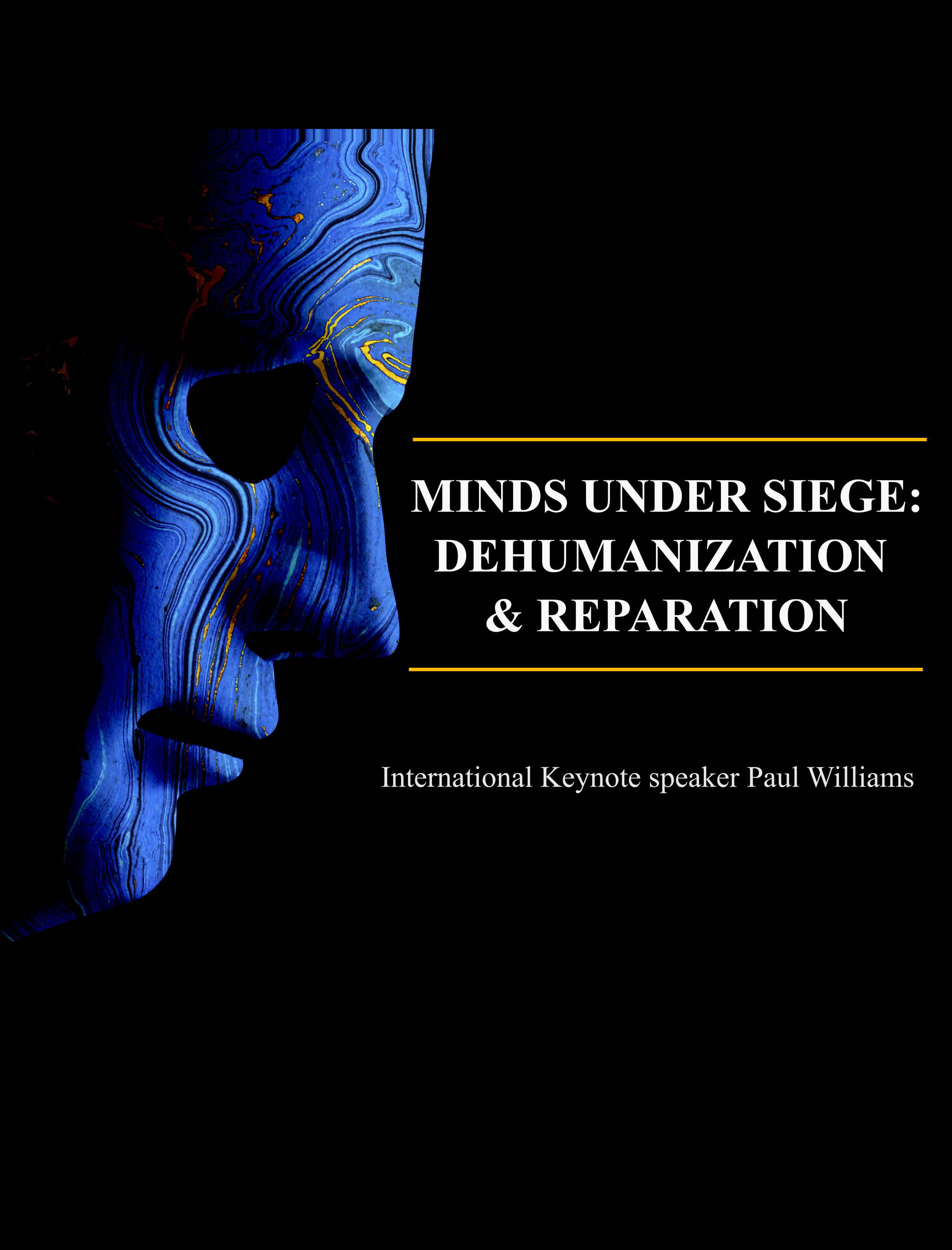
Minds Under Siege: Dehumanization & Reparation

In-room | Adelaide Pavillion, South Australia

This conference brings together psychoanalytic reflections on extreme suffering, experience of endurance and the condition under which transformation and redemption may become possible. Across presentations and discussions, it engages with the causes and consequences of turbulent inner lives, drawing on psychoanalytic perspective to think through its psychic and relational consequences.

Scroll to:  

Speakers   Wednesday Programme   Thursday Programme   Friday Programme   Registrations


Keynote Speaker


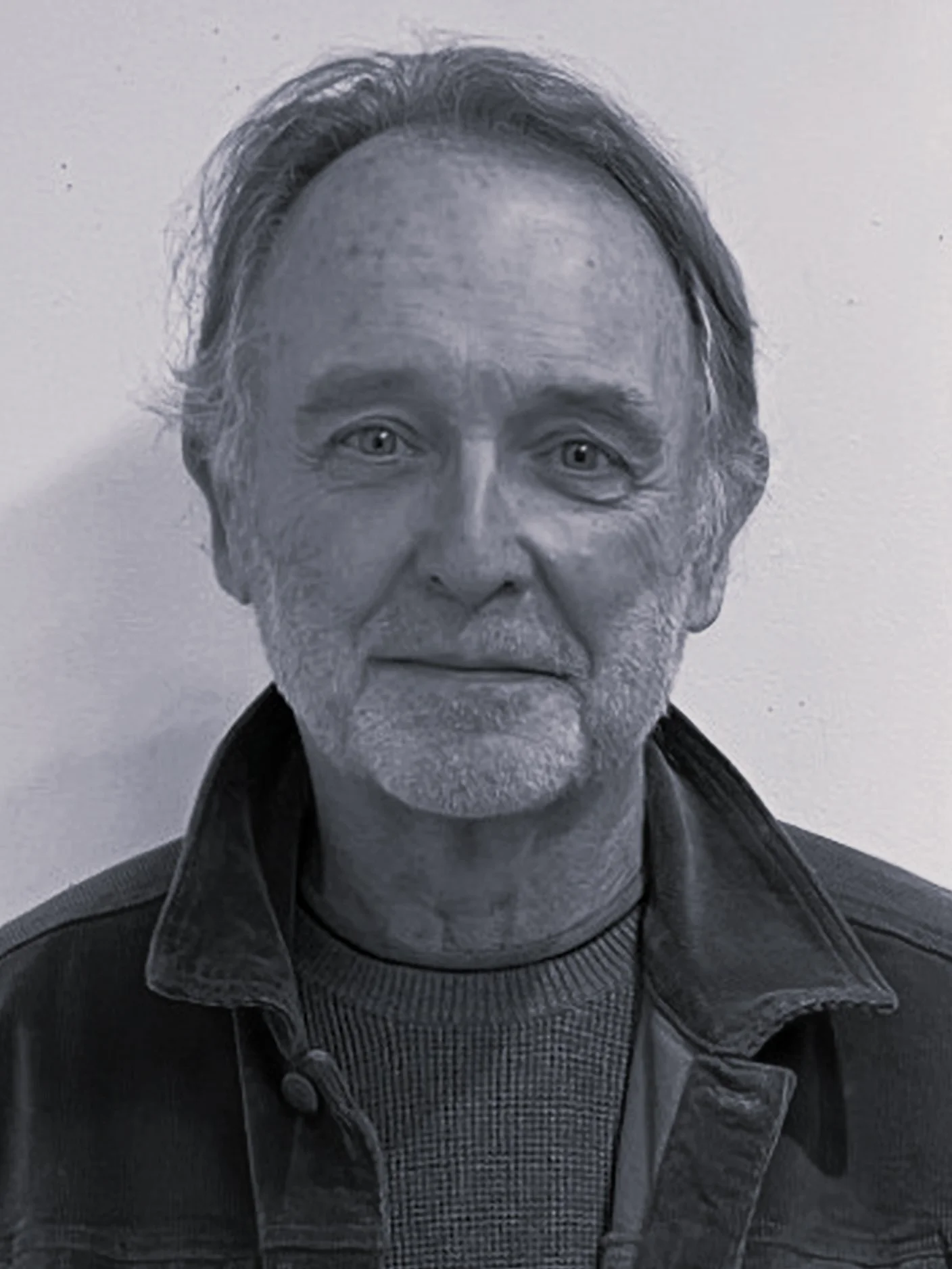
Paul Williams

Read more

Dr Paul Williams trained as a Psychoanalyst with the British Psychoanalytical Society where he was a Training and Supervising Analyst. He was awarded the Rosenfeld Essay Prize for the treatment of severe disturbance, was joint editor-in-chief of the International Journal of Psychoanalysis with Glen Gabbard between 2001 and 2007 and worked as a Consultant Psychotherapist for the British National Health Service in Belfast, Northern Ireland. He lives and works in Northern California and has published many books and papers on the subject of severe disturbance, including psychosis. He is joint editor of American Psychiatric Publishing’s Textbook of Psychoanalysis. He has published a literary trilogy depicting severe disturbance as seen from the inside: The Fifth Principle, Scum and The Authority of Tenderness. His first novel, ‘Nothing Happened’, depicts the experience of soul murder and the possibility of redemption from it. He was recently awarded the 2025 Haskell Norman Award for Psychoanalytic Excellence by the San Franciso Centre for Psychoanalysis.


APAS Speakers

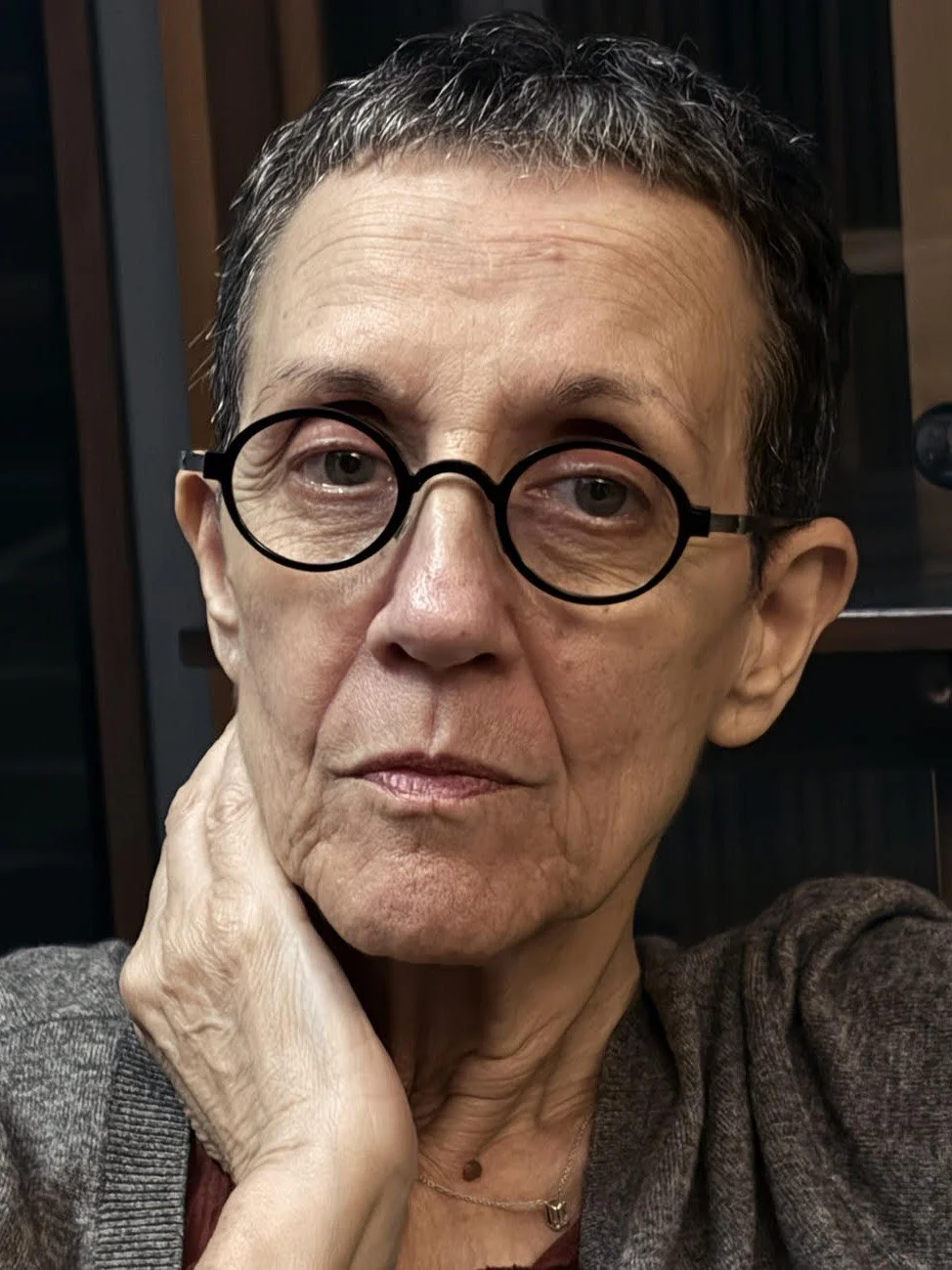
Shanthi Saha

Read more

Shanthi Saha is a psychiatrist and psychoanalyst in full time private practice in Adelaide She is a training analyst with the Adelaide Branch of Australian Psychoanalytical Society and is an accredited supervisor for psychotherapy for trainee psychiatrists. She has particular interest in educational activities of the Adelaide Institute of Psychoanalysis. She is involved in organizing as well as conducting seminars run by the Adelaide Institute including the seminar series on de-escalation of suicidal patients with BPD in the emergency department.

Nasim Wesley

Read more

Nasim Wesley is a clinical psychologist and adult psychoanalyst. She has worked with children, adolescents and adults in government and educational settings. She is now in full time private practice in Sydney, working with adults, adolescents and children and their families.

Carla Sarkis

Read more

Carla Sarkis is a Clinical Psychologist and Adult Psychoanalyst having trained with the Sydney Branch of APAS. She works psychoanalytically with adults in private practice in Sydney's inner west.

Jennifer Bestel

Read more

Jennifer Bestel PhD is a clinical psychologist and adult psychoanalyst. She has a bachelor’s degree in English literature from Providence College, Rhode Island and received her PhD in clinical psychology from the California School of Professional Psychology-Alameda. She began analytic training in 2018 and became a member of the Australian Psychoanalytic Society in April 2026. She has a full-time private practice in Sydney where she works with adults and couples.


Sonia Wechshler

Read more

Sonia Wechsler is a Clinical Psychologist, Child and Adult Psychoanalyst, and Training and Supervising Psychoanalyst with the Australian Psychoanalytical Society (APAS). She currently serves as the Deputy President of APAS and is the Asia Pacific Representative on the Psychoanalytic Education Committee (PEC) of the International Psychoanalytical Association (IPA). Sonia has presented at several local and international conferences and maintains a private psychoanalytic practice in Sydney, Australia.

Pamela Shein

Read more

Pamela Shein is a Child and Adult Training Analyst with the Australian Psychoanalytical Society. She is the Chair of the Child and Adolescent Standing Committee for the Australian Psychoanalytical Society. She is a member of COCAP- the Committee for Child and Adolescent Psychoanalysis for the IPA and is the COCAP representative of the Asia Pacific Region. She is a Visiting Professor and the Infant Observation Coordinator to the Psychotherapy Training Program in the Huazhong University of Science and Technology, Wuhan. She is in private practise in Sydney, working with adults, children, adolescents, parents and infant observation groups.

Matthew McArdle

Read more

Matthew McArdle is a psychiatrist, psychotherapist and psychoanalyst working in Melbourne. He is a Training and Supervising Analyst of APAS. He is past Melbourne Branch and Institute Chair. He is the current APAS President. .

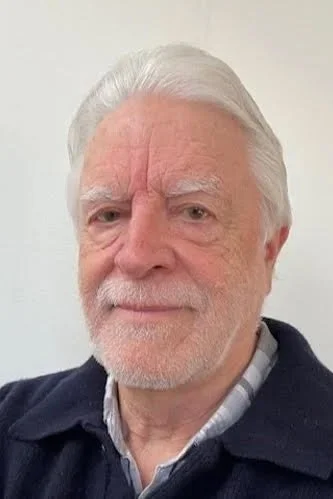
Peter Smith

Read more

Dr Peter Smith is a psychiatrist and Training Analyst with the Australian Psychoanalytical Society (APAS). He is a past Chairman of the Melbourne Branch of APAS and the Melbourne Institute for Psychoanalysis. His professional interests include mother-infant psychology, the conceptualization and manifestations of trauma and mind-body psychology. For many years, he has been actively involved with the education of psychoanalytic candidates-in-training with teaching in theoretical and clinical seminars together with the supervision of clinical work.


Wednesday 27 August 

blue banner image.jpg

8.00 – 8.30

Morning Coffee


8:30 – 9:00

Welcome To APAS Members’ Conference

Acknowledgement of Country and Welcome by APAS President, Matthew McArdle


9:00 – 10:30

Isolation

Winnicott used the term “the isolate” to describe an “incommunicado self,” which must remain hidden for personality development to proceed satisfactorily. Paradoxically, the concealed isolate accedes to the personality’s dependence on an object for this development to take place. The impact of trauma on the isolate and the formation of pathological isolation are considered. The outcome of analysis with a traumatized person is contingent upon the type of narcissistic defenses employed to protect the isolate that has experienced impingement and exposure, with the adverse consequences for personality development this entails. A particular form of narcissistic withdrawal into what Andre Green terms “deobjectalization” and “negative narcissism” is examined as a way in which the death instinct can infuse the personality’s defense of the isolate, limiting radically what may be analyzed. Winnicott used the term “the isolate” to describe an “incommunicado self,” which must remain hidden for personality development to proceed satisfactorily. Paradoxically, the concealed isolate accedes to the personality’s dependence on an object for this development to take place. The impact of trauma on the isolate and the formation of pathological isolation are considered. The outcome of analysis with a traumatized person is contingent upon the type of narcissistic defenses employed to protect the isolate that has experienced impingement and exposure, with the adverse consequences for personality development this entails. A particular form of narcissistic withdrawal into what Andre Green terms “deobjectalization” and “negative narcissism” is examined as a way in which the death instinct can infuse the personality’s defense of the isolate, limiting radically what may be analyzed.

Speaker: Paul Williams
Chair: Matthew McArdle


10:30 – 11:00

Morning tea


11:00 – 12:30

“Am I about to step on a landmine?” Navigating pathological organization in a perilous analysis

This paper explores the evolving landscape of the internal world in the psychoanalysis of a patient with pathological organization over a 12-yr period. Particular attention is paid to the oscillation between contact with the vulnerable terror laden states and the emergence of a cruel, omnipotent and sadistic configuration that attacks both self and the object. These shifts are accompanied by recurrent threats of psychotic breakdowns, marked by collapse in thinking, linking and meaning making. The analysis is experienced as precarious, at times perilous, requiring careful technical navigation of rapidly shifting psychic states.

Speaker:Shanthi Saha
Chair: Kathryn Bays


12:30 – 13:30

Lunch


13:30 – 15:00

On the Precipice and the Search for Solid Ground

The three authors discuss psychoanalytic experiences of invasion, dehumanisation and reparation from three perspectives. The first author describes projective identification with a traumatised analysand, drawing upon the work of Winnicott and Williams to illuminate these experiences. The second author explores the process of developing an “analytic mind of one’s own" given the pressures of analytic training, particularly maintaining training cases. The third author discusses how theory can invade the consulting room, dehumanizing both analyst and analysand, creating distance rather than an authentic connection. All three authors depict creative movements toward “solid ground,” of being in deeper contact with ourselves, and our patients. The analytic attitude can often feel “on the precipice” requiring the return to and protection of an alive “solid ground”; the good object.

Speakers :Nasim Wesley, Carla Sarkis and Jennifer Bestel
Chair: Rise Becker


15:00 – 15:30

Afternoon Tea


15:30 – 17:00

Society Matters

Thursday 28 August 

blue banner image.jpg
 

08:30 – 09:00

Morning Coffee


09:00 – 10:30

"What just happened"

A particular experience occurs in the formation of an “object relationship” if we ask the question, “What just happened?” when subject and object make a fundamental (unconscious) connection. When such a connection takes place in psychoanalysis, something extraordinary occurs: The object “disappears” and is replaced by “something else” which seems to lie at the core of a trustworthy relationship. The “disappearance of the object” and appearance of “something else” are evoked by an intimate unconscious communication between the bodies and minds of patient and analyst yielding an experience that is “full” or“replete” whilst also light, even “empty,” in a peaceful sense. It comprises acceptance of oneself and of the other. I am who I am. You are who you are. We are who we are together. Nothing need be added or taken away. It may induce the feeling of having “all the time in the world.” The object does not, in fact, cease to exist. It is the subjective experience of an object in a state of connected repose, brought about by mutual acceptance achieved through unconscious accord. Some of the most satisfying feelings of being alive may occur this way. Three stages of experience in the formation of an object relationship, in this light.

Speaker: Paul Williams
Chair: Gil Anaf


10:30 – 11:00

Morning tea


11:00 – 12:30

New shoes, old shoes, are these shoes mine?" Communication with the difficult to reach adolescent

The paper focuses on the analysis of an adolescent, with particular attention to narcissistic defences. It explores the developmental challenges and opportunities characteristic of adolescence as they emerge within the analytic process. Through a series of clinical vignettes, key movements and shifts in the analysis are illustrated. The paper also examines obstacles both within and surrounding the analytic work, with particular emphasis on manifestations of omnipotence.

Speaker: Sonia Wechsler
Chair:TBC


12:30 – 13:30

Lunch


13:30 – 15:00

Shut In Shut Out: An exploration from despair to recovery

The paper explores how psychic withdrawal can be shaped by inter-generational transmission of unresolved psychic conflict. Through a clinical case, a patient’s intense loneliness and yearning for the other was revealed in the transference to be deeply connected to the unresolved oedipal struggles of his parents. The patient’s psychic reality was dominated by these inherited conflicts, resulting in a fragile personality structure and a retreat into autisto-psychotic and narcissistic solutions. Unable to locate himself outside the gravitational pull of his parents’ unmetallized histories the patient remained trapped in his internal object world that foreclosed genuine contact with others. The early primal experience discovered in the transference brought to life a profound loss that was covered up, exposing the catastrophic breakdown. It is argued that the transference and countertransference relationship, understood as a dynamic and stabilizing system, provided the essential ground through which the patient’s identity and capacity for relational life could gradually be uncovered and restored.

Speaker: Pam Shein
Chair:Kate Kendall


15:00 – 15:30

Afternoon Tea


15:30 – 17:30

Across the Generations: An APAS Fishbowl Discussion

A conversation for all members and candidates.

How do we welcome those just beginning their journey within APAS, and how do we continue to draw on the wisdom of those whose careers are drawing to a close? Using the fishbowl format familiar from last year's Sydney conference, Rise Becker and Matt McArdle will facilitate an open, free-floating discussion — exploring how our society receives its newest members, honours its most experienced, and tends to the connections in between.


From 19.00

Members’ Dinner


Friday 29 August 

blue banner image.jpg

8:30 – 9:00

Morning Coffee


9:00 – 10:30

Psychoanalysis Under Siege: Fear, Emergence and a Path to Alive Analysis

We are living in a world of war, climate catastrophe, extreme polarisation, fracturing of democracies, social, political and economic uncertainties, increasing isolation and uncertainty. If there was ever a time when psychoanalysis and psychoanalysts might have something to say within our society, it would be now. Yet psychoanalysis is also in crisis — increasingly sidelined from mainstream mental health, culture and institutions, and trapped in the same extreme polarisation as the rest of the population. At the heart of this crisis, the paper argues, is a deep and pervasive fear: the annihilation anxiety of a discipline that fears its own extinction, experienced most acutely as a fear of being — or becoming — irrelevant.

This paper argues that this fear drives a crisis that takes two mutually reinforcing but equally deadening forms. The first is Fortress Analysis — a defensive orthodoxy that mistakes the preservation of psychoanalytic form for fidelity to its spirit. The second is Palatable Analysis — a reformist impulse that waters down the fire of the unconscious in pursuit of relevance. Both are responses to the almost unbearable feeling of irrelevance. And paradoxically, both defences achieve precisely what they seek to prevent — the death of analysis itself: dead theory, dead application of known methods, and an aliveness snuffed out by the very attempts to preserve it.

Against both, the paper proposes a third path: Alive Analysis of Emergence. Drawing on the bedrock of Freud, Klein, Winnicott, and Bion, yet equally founded in the contemporary work of thinkers such as Ogden, Bollas, Ferro, and Civitarese, it understands psychoanalysis as both an emerging science and a science of emergence — always unfinished, always responsive to its moment, always willing to be surprised by the living mind it studies.

Speaker: Matthew McArdle
Chair: Richard Price


10:30 – 11:00

Morning Tea


11:00 – 12:30

“There’s something about life I don’t like”

In this paper, the author describes and discusses his analytic work with an adult patient in her mid-thirties. Bea presented with a background of a most difficult and troubled early life characterised by parental disregard, emotional abuse, loss and deprivation. She developed intense incapacitating social anxiety in her late adolescent years and became emotionally and socially isolated thereafter. During the course of her psychoanalysis over five years, she oscillated between experiencing her analyst as supportive, helpful and well intentioned with an experience of feeling misunderstood by him, rejected and persecuted.

Overall, the experience of being Bea’s analyst was akin to a rollercoaster ride. The ups and downs could be understood in terms of her fluctuating and shifting identifications in the course of the analytic work. These manifest as intense transference reactions and strong countertransference responses. Instances of these reactions and responses are described. The therapeutic alliance was ultimately unstable with the analysis ending unilaterally despite attempts by the analyst to salvage development that had occurred. The author compares and contrasts his analytic work with Bea with Melanie Klein's treatment of Erna. Klein's pioneering work with this little girl was one of the central influences in Klein’s developing understanding of infantile sexuality with its attendant anxieties. These understandings are briefly detailed.

Speaker: Peter Smith
Chair: Milena Mirabelli


12:30 – 13:30

Lunch


13:30 – 15:30

AGM

Online option available for the AGM only


14:00 – 15:30

Candidate Seminar with Paul Williams

At AIP @ 300 Fullarton Road


15:30 – 17:00

AGM

Online option available for the AGM only


Registration Information


In-room and online options are available

The rates below are for early bird registrations received by 30 June. A 10% increase will apply thereafter


Full conference In-Room

Members - Early Bird

$850


Candidates - Early Bird

$400


Full Weekend Open Days only In-Room

Members - Early Bird

$550


Candidates/Retired members - Early Bird

$230


Saturday only: Members - Early Bird

$350


Saturday OR Sunday only: Candidates/Retired members - Early Bird
A single registration fee applies for attendance on either one or both days.

$230


Saturday Open Day Only - Online

Saturday Only Online: Members - Early Bird

$250


Saturday Only Online: Candidates/Retired members - Early Bird

$230


light blue banner image.jpg